Were Republicans Agains Guns in the History
WASHINGTON - A series of loftier-contour mass shootings that accept left communities grieving is renewing the country'south fierce debates over the place of firearms in American social club and the merits of gun control.
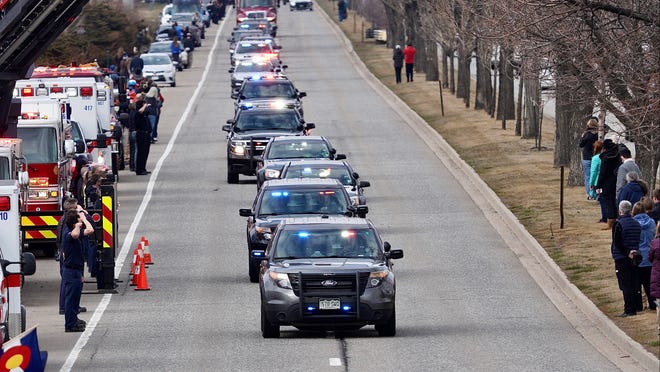
In less than a week, xviii people died from gun violence in 2 mass shootings. On March xvi, a gunman in Atlanta targeted multiple local businesses, killing eight people, 6 of whom were Asian American women. On Monday in Boulder, Colorado, a man opened burn down into a King Soopers grocery store, killing ten people, including one law officer.
Nationwide, in that location have been 103 mass shooting incidents in 2021. Merely amid them, there is a widening chasm betwixt how Republicans and Democrats are legislating on access to firearms.
Democrats call for limits on guns
On i side, the violence has reignited calls for greater gun control legislation, a desire Democratic lawmakers are intent on fulfilling.
"For the 2d fourth dimension in a calendar week, our nation is being confronted past the epidemic of gun violence," Firm Speaker Nancy Pelosi said in a statement Tuesday. "Action is needed now to forbid this scourge from continuing to ravage our communities."
President Joe Biden told reporters Tuesday the Senate should "immediately laissez passer the two House bills that would close loopholes in the background system," referencing legislation that would aggrandize the number of instances when a groundwork bank check is necessary for purchasing or transferring a firearm.
"Nosotros should as well ban attack weapons in the procedure," the president said, echoing a long-held Democratic goal and a policy Biden himself helped enact in the 1990s.
Democratic lawmakers, who have unified control of Congress and the White House for the offset fourth dimension in a decade, are besides pushing for more stringent screenings on the sale of weapons to people with criminal records, mental illnesses and past abusive behavior.
'Public health crisis':Senators fence how to stop gun violence in the wake of Boulder shooting
Republicans expand access to firearms
Withal in many Republican-dominated states, lawmakers are expanding admission to firearms, arguing that such "constitutional bear" measures better protect individual liberties and public safety.
On Monday, Tennessee Gov. Neb Lee thanked members of the National Rifle Association for helping to push a beak through the state legislature that would remove Tennessee's permit requirement to deport a handgun.
"What's most important here is we allow the rights of law-abiding citizens to be protected," Lee said. The law is part of the starting time-term Republican governor's broader "public safety agenda."
Lee emphasized that "none of us want gun violence," calculation, "nosotros're working really hard in our state and in the legislature to bring forth laws that increase penalties for violent offenders."
In Iowa, a similar beak too would remove the state's permit requirements to acquire or comport handguns, along with a loosening of other restrictions. It is headed to the governor'south desk in the coming days.
"Currently, whether nosotros want to admit it or not, our system of permits is one of mistrust," Republican land Sen. Jason Schultz, the bill'southward sponsor, said on the Iowa Senate floor. "That means you can exercise a central correct, merely you lot must prove yourself not guilty in advance. That is not how America is supposed to work."
In February, Indiana's land legislature too voted to eliminate requirements for permits to behave a gun. Other states, including Alabama, Louisiana and South Carolina, are because like legislation.
Seventeen states already accept constitutional carry laws on the books.
More:9 bills from guns to George Floyd to the ERA wait in the Senate: Will any go enough Republican back up to laissez passer?
A circuitous cultural divide
The current drive of gun control legislation is both a byproduct of the Republican dominance of many state governments and a widening gap between the parties on gun policy, according to scholars.
The recent success of many gun rights activists, like the National Rifle Association, "tin be explained by the number of states over the last decade that have at some point been Republican trifectas of governance," says Matthew Lacombe, an assistant professor of political scientific discipline at Barnard College who studies the National Rifle Clan and gun cultures around the U.South.
"In other states, nosotros've also seen expanded gun regulation and those are often places where Democrats hold power. The sort of the gridlock we associate with national politics is less nowadays so movement is more possible in either direction," Lacombe said of why motility on the result has been so swift.
While polls consistently find potent support for measures like universal background checks or "scarlet flag laws," partisan polarization on the outcome increasingly obscures the policies actually existence debated, according to Michael Siegel, a professor at the Boston Academy School of Public Health.
"The main reason is the caste to which Republicans have bought the NRA rhetoric," said Siegel, who has closely surveyed gun owners and gun violence. The grouping "has substantially portrayed the fight over gun command legislation as a culture war. Information technology has broadened the result from 'How should we protect gun safety?' to 'What kind of culture practice nosotros accept?'"
In reality, public stance on guns is both much more complex and united than public soapbox might imply.
Few prospects for consensus
Simply with Democrats in Washington and statehouses across the country increasingly blithe past calls for greater gun control, the already bitter partisan divide over firearms is poised to farther widen.
Whether any gun control legislation will be passed into, law, nonetheless, is contingent on whether Democrats in the Senate can garner 10 votes from Republicans to interruption the legislative filibuster, which requires 60 votes to cease debate on any bill.
The threshold is a daunting one for gun command or any legislation, especially as moderates similar Sen. Joe Manchin, D-West.Va., have expressed opposition to the legislation passed past the House.
Opinions outside the beltway further complicate the situation. While majorities of Americans are supportive of stronger gun control legislation, including a majority of Republicans on cardinal policy changes, resistance to such measures varies greatly by demographic.
Gun owners and non-gun owners concur on some policy changes, like stopping the severely mentally ill from accessing weapons. But a 2017 Pew survey found large gaps between gun-owning Americans and not-gun owners on a range of commonly debated proposals. And while 40% of American households report having at least i gun in their domicile, the land besides sees wide divides in gun ownership between states, partly reflecting an urban-rural divide.
A recent survey published past Siegel and his colleagues too found broad divides between gun owners based on the model of the guns they own. Gun owners who own models the study classified as used for recreational or defense reasons were much more likely to support gun command measures than owners who had tactical models, which included many designs generally described every bit assault weapons.
Rural Americans were too far more probable to cite recreational reasons for having a gun, like hunting, while urban and suburban gun owners were nearly likely to cite self-defense as their reason for owning a gun.
"There is no singular gun culture, there are many subcultures and there are many different types of gun cultures," Siegel said. "Inside each country, there is a mix of cultures and when describing U.S. gun cultures there is a multidimensional aspect," to guns and gun owners that cannot be ignored, Siegel emphasized.
Urban and suburban voters are more accepting of gun control measures than their rural counterparts, a conflict partly driving the electric current deviation between states pursuing greater gun command measures and those seeking to expand gun admission.
Colorado and Virginia, both one time solidly bourgeois states that shifted to the left over the past decade, saw trigger-happy battles in their land legislatures over gun control as Democrats contended with entrenched gun cultures exterior the populous urban and suburban regions that handed them governing power.
Nationally, the state remains closely divided on the outcome. While 56% of the public is dissatisfied with the country's current gun laws, according to a Feb Gallup poll, merely 41% of the public consequently wants stricter codes. A November Gallup also found that while a majority of the public, 57%, wants stricter gun control measures, that number has trended downwardly from a record high of 67% in 2018, subsequently a mass shooting in Parkland, Florida.
A clear partisan split likewise hamstrings gun control efforts. The Feb Gallup poll plant that 69% of Republicans are either very or somewhat satisfied with the country's current approach to firearms, compared to but 22% of Democrats.
Republicans take too get more obstinate on the event over fourth dimension. In 2004, 56% of Republican-leaning voters idea information technology was more of import to protect Americans' right to own a gun than to command gun ownership, compared with 29% of Democrats that year, co-ordinate to the Pew Research Center.
In October 2019, after over a decade of loftier-contour mass shootings that rocked the state'southward politics, eighty% of Republicans believed protecting gun rights should be prioritized over gun control measures. For Democrats, the number had dropped to 21%.
"For a lot of people, gun ownership is a very important lens through which people view politics, only for many others, it has just become another part of their partisan lens," Lacombe said.
The abrupt splits over gun control across the state are non intimidating national Democrats, who see the issue every bit necessary and politically advantageous.
"This is our moment to make our stand up. Now," Sen. Chris Murphy, D-Conn., an outspoken advocate for gun control, tweeted after the shooting in Bedrock.
In that location take been 103 mass shootings in 2021 and so far, according to the Gun Violence Annal, which defines a mass shooting as any incident where four or more than people were shot or killed, excluding the gunman. Of those incidents, at that place have been half dozen mass killings this year, which the Federal Bureau of Investigation defines as an incident where four or more people are shot and killed.
The U.South. is an outlier among developed countries in both the levels of gun ownership and gun violence in the country. 2020 was a record yr for gun sales with nearly 40 million firearms sold final year and iv.1 million more purchased past Americans in January 2021 alone. Terminal year too saw a record for the number of deaths because of gun violence; over 41,500 people were reported killed in gun-related incidents.
Source: https://www.usatoday.com/story/news/politics/2021/03/24/democrats-press-national-gun-control-republican-states-expand-firearm-access/6966823002/
0 Response to "Were Republicans Agains Guns in the History"
Post a Comment